 +1 (843) 780-2402
Inground Pool Accessibility: A Homeowner’s Guide
Inground pools are the epitome of luxury in South Carolina. During warm weather, they provide a relaxing and refreshing respite for friends and family. However, homeowners should be mindful of everyone’s needs and desires. Those with mobility limitations deserve a cooling dip also.
Regardless of your guest’s physical abilities, you can enjoy outdoor entertainment, relaxation, and recreation together. Let’s explore why inground pool accessibility is essential and discuss ways to construct something for everyone.
Why Inground Pool Accessibility Matters
For individuals with disabilities or mobility challenges, the simple act of entering and exiting a pool can be tedious. Recognizing and addressing those issues is critical. It communicates inclusivity and is an ethical requirement in some spaces.
South Carolina laws prohibit public pools from operating without accessibility features like ramps, lifts, and railings. Take a cue from those locations by building accessible components in your backyard. Make everybody feel safe and welcome with an intelligently designed inground pool.
DID YOU KNOW: You can get a 3D design of your pool before construction to test pathways and reconfigure the layout.
 Key Features for Inground Pool Accessibility
Want to make your inground pool more enjoyable for the party? Integrate these critical features to ensure a good time:
#1. Pool Lifts
A pool lift is a mechanical device that assists individuals with mobility issues in and out of the water. Choose hydraulic or portable options to customize your oasis. This feature is ideal for those who can’t use stairs, ramps, or other poolside devices.
#2. Stair Railings
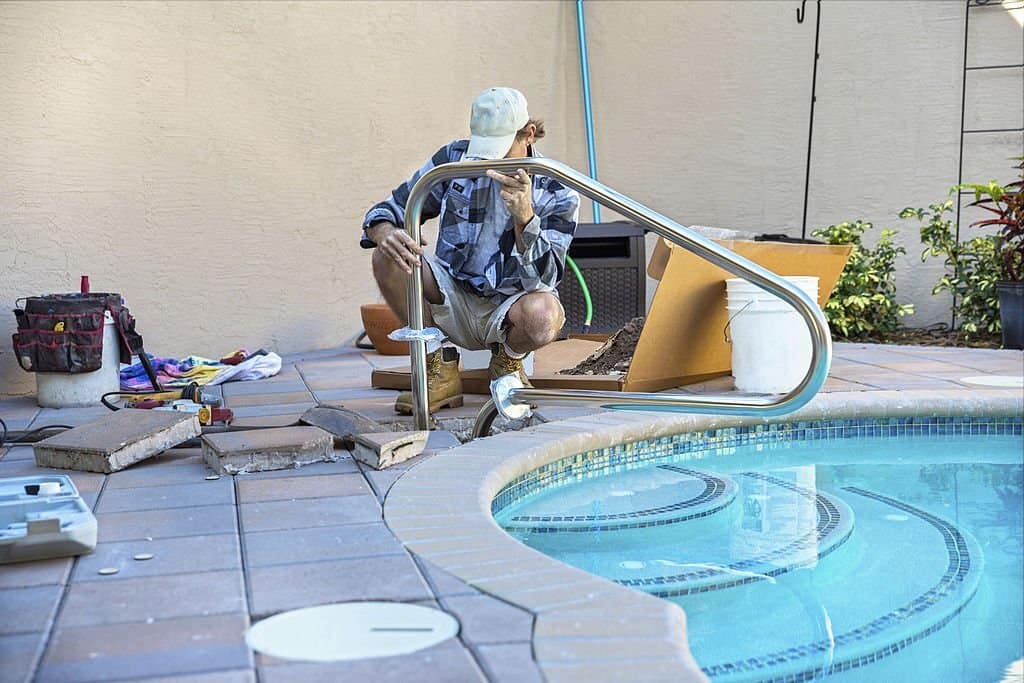
Don’t start pool installation without configuring the railings. Adding sturdy railing to your pool’s parameters provides vital support for those in need. Rails can also help balance and stability while entering or exiting the pool.
#3. Entrance and Exit Ramps
Pool ramps are an excellent option for those in wheelchairs. The gradual incline provides a gentle slope into the water, eliminating the need for steps or ladders. The descent also allows people to get in the pool without assistance, encouraging independence and strenuous exercise.
#4. Transfer Platforms
Many construction projects involve transfer platforms around the pool’s edge to facilitate easy movement from wheelchairs to water. Offer friends and family a stable surface for transitioning between locations to ensure seasonal fun for everyone.
#5. Poolside Seating
Entry and exit points are essential, but so is adequate seating. Build rest areas for people to sit down and relax poolside. Encourage safe interactions and socialization in a tailored outdoor living space.
Key Features for Inground Pool Accessibility
Want to make your inground pool more enjoyable for the party? Integrate these critical features to ensure a good time:
#1. Pool Lifts
A pool lift is a mechanical device that assists individuals with mobility issues in and out of the water. Choose hydraulic or portable options to customize your oasis. This feature is ideal for those who can’t use stairs, ramps, or other poolside devices.
#2. Stair Railings
Don’t start pool installation without configuring the railings. Adding sturdy railing to your pool’s parameters provides vital support for those in need. Rails can also help balance and stability while entering or exiting the pool.
#3. Entrance and Exit Ramps
Pool ramps are an excellent option for those in wheelchairs. The gradual incline provides a gentle slope into the water, eliminating the need for steps or ladders. The descent also allows people to get in the pool without assistance, encouraging independence and strenuous exercise.
#4. Transfer Platforms
Many construction projects involve transfer platforms around the pool’s edge to facilitate easy movement from wheelchairs to water. Offer friends and family a stable surface for transitioning between locations to ensure seasonal fun for everyone.
#5. Poolside Seating
Entry and exit points are essential, but so is adequate seating. Build rest areas for people to sit down and relax poolside. Encourage safe interactions and socialization in a tailored outdoor living space.
 Poolside Pathways to More
Well-designed pathways around your pool are as important as the pool itself. How can anyone enjoy a cool dip in the water if they can’t reach it? Besides, an unkept outdoor space can wreak havoc on your pool, requiring additional pool cleaning services and maintenance.
Build walkways that lead to the pool, or construct your pool on a patio for easy access. Pathways should be smooth, slip-resistant, and wide enough for effortless navigation. Discuss different design options with your local pool installation expert.
Also, include adequate lighting to ensure safe travels from one part of your pool to another. Lights help enhance visibility to create a better environment for guests during the evening hours. Discover ways to integrate creative lighting into your pool design.
Conclusion
Inground pool accessibility is not just about compliance with regulations. It’s about creating an inclusive atmosphere that each person can enjoy regardless of their mobility. Incorporate features to create an inviting environment. Contact local pool installation experts for creative design solutions.
Poolside Pathways to More
Well-designed pathways around your pool are as important as the pool itself. How can anyone enjoy a cool dip in the water if they can’t reach it? Besides, an unkept outdoor space can wreak havoc on your pool, requiring additional pool cleaning services and maintenance.
Build walkways that lead to the pool, or construct your pool on a patio for easy access. Pathways should be smooth, slip-resistant, and wide enough for effortless navigation. Discuss different design options with your local pool installation expert.
Also, include adequate lighting to ensure safe travels from one part of your pool to another. Lights help enhance visibility to create a better environment for guests during the evening hours. Discover ways to integrate creative lighting into your pool design.
Conclusion
Inground pool accessibility is not just about compliance with regulations. It’s about creating an inclusive atmosphere that each person can enjoy regardless of their mobility. Incorporate features to create an inviting environment. Contact local pool installation experts for creative design solutions.